Home / Finance
Profitable, and still short of money on Friday
Construction has a structurally negative cash cycle. Materials, plant and wages go out in days; certified payment comes back in weeks or months, and a slice is held as retention long after the job is finished. That gap sinks firms that are profitable on paper. This page is about where the gap comes from, what finance genuinely fixes, and what it does not.
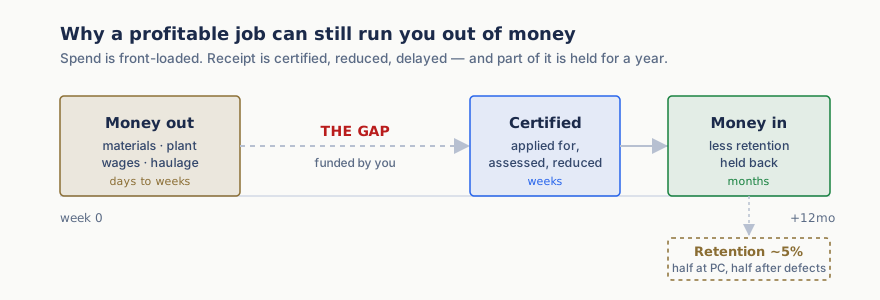
Where the gap comes from
Four things in combination, none of which is unusual on its own.
- You buy before you bill. Aggregates, plant hire and wages are paid on the supplier's or the worker's terms, which are short. On a groundworks package the material spend can land almost entirely in the first third of the programme.
- Applications are certified, not just paid. An application for payment goes in, is assessed, is certified — often at less than applied for — and is then paid on the certificate's terms. Each step adds time and each step can reduce the figure.
- Retention sits on top. A percentage of every payment is withheld as security, typically around 5%. Half usually comes back at practical completion and the rest at the end of the defects period, frequently a year later.
- The chain passes the delay down. A main contractor waiting on a client tends not to absorb that wait; it is passed to the subcontractor, who passes it to the supplier.
What finance actually does
Invoice and application finance
Advances a proportion of an invoice or certified application shortly after you raise it; the lender is repaid when the client pays. In construction it is more specialist than in other sectors, because applications, certification and retention make the debt more complicated than a straightforward invoice — which is why generalist facilities often decline construction and specialist ones do not.
What it does: turns a payment delay into a known cost. What it does not do: rescue a job that was priced too low. Financing a loss simply postpones it and adds a fee.
Asset finance
Spreads the cost of plant and vehicles across their working life rather than paying up front — excavators, dumpers, telehandlers, welfare units. The asset generally secures the facility, which is why it is often obtainable where unsecured lending is not.
Trade credit
The cheapest funding in construction is usually the supplier's own terms, and it is routinely under-negotiated. Agreed terms on a material account can be worth more to a programme than a finance facility, and cost nothing.
Capital allowances
Not finance, but the same effect on cash. Qualifying plant, machinery and certain elements of building work attract allowances that reduce a tax bill, and construction firms under-claim them consistently — usually because nobody separated the qualifying elements out when the work was done.
Do these first — they are free
Check who is paying you
Run the client or main contractor through the solvency check before you take the package, not after. Late payment from a firm in trouble is a different problem to late payment from a firm that is simply slow.
Check a company →Price it properly first
Most cash crises begin as pricing errors. A band with visible provenance tells you whether the margin was ever there — before the job funds the discovery.
Price a job →Negotiate the terms you already have
Supplier terms, retention percentage and the release mechanism are all negotiable at the point of agreement and immovable afterwards. That point is worth taking seriously.
Materials & terms →Where we fit
We are a construction business, not a lender and not a broker holding itself out as regulated. Where cash flow is the constraint on a project we are working on or supplying, the options get explained plainly and, if it makes sense, routed to specialist construction lenders who understand applications, certification and retention.
What we will not do is promise a facility, quote a rate we do not set, or suggest borrowing is the answer to a job that does not work. Frequently the honest answer is that the price was wrong, the terms were wrong, or the payer was wrong — and none of those are fixed by a facility.
Questions
Why do profitable construction firms run out of cash?
Because the money goes out before it comes in. Materials, plant and wages are paid within days or weeks; the application is certified and settled far later, and a slice is held as retention for months or years after completion. A firm can be profitable on paper and unable to make Friday's payroll.
What is retention and when do you get it back?
A percentage of each payment held back by the client as security, typically around 5%, with half usually released at practical completion and the balance at the end of the defects period — often twelve months later. It is money you have earned that you cannot spend.
What does invoice finance actually do?
It advances a proportion of an invoice or certified application shortly after you raise it, and the lender is repaid when the client pays. It converts a payment delay into a cost. It does not create money and it does not fix a job priced too low.
What is asset finance used for in construction?
Spreading the cost of plant and vehicles over their working life rather than paying up front — excavators, dumpers, telehandlers, welfare units. The asset usually secures the facility, which is why it is often available where unsecured lending is not.
Are you a lender?
No. We are a construction business. Where cash flow is the constraint on a project we explain the options plainly and route to specialist construction lenders. Nothing here is regulated financial advice and no lender promises are made.
Is there anything free worth doing first?
Three things: check who is paying you, confirm the job was priced properly, and negotiate supplier terms and retention at the point of agreement. All free, and between them they prevent more cash crises than any facility resolves.
Cash flow the constraint on a project?
Tell us what the project is and where the gap falls. You will get a straight answer, including when the answer is that finance is not what you need.