Home / Running the job
Running the job, and the record that protects it
Most construction disputes are not about workmanship. They are about what was agreed, when it changed, and who said so — and they are won by whoever kept the better record. Programme, dated site records, variations in writing and documents that exist before you need them. This is the unglamorous half of construction and it is where margin survives or dies.
The record is the job
Ask anyone who has been through an adjudication what decided it. It is almost never the quality of the brickwork. It is whether there is a dated photograph, a signed variation, a delivery ticket, or a diary entry saying the ground was wrong on the fourteenth.
The record costs almost nothing to keep and is worth a great deal exactly once — which is why it gets skipped. Every site that has been stung keeps it afterwards.
What is actually worth recording
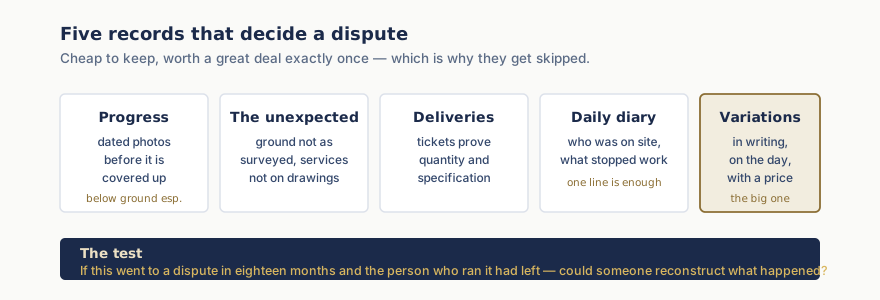
- Progress, dated. Photographs at the end of each meaningful stage, before it is covered up. Below-ground work in particular: once it is backfilled, the photograph is the only evidence it was done properly.
- Anything unexpected. Ground conditions that do not match the survey, services not on the drawings, an existing structure in worse shape than described. Photograph it before you work around it.
- Deliveries. Tickets matter for quantity disputes and for proving what specification actually arrived on site.
- Who was on site and what stopped work. A one-line diary is enough. Weather, a late delivery, another trade blocking access — these are the facts a delay claim stands or falls on.
- Variations. Confirmed in writing on the day, with a price or a stated basis for pricing.
Variations, and why they turn into arguments
A variation agreed verbally on site and priced three weeks later is the single most reliable source of conflict in construction. Not because anyone is dishonest — because two people remember a site conversation differently, and by the time it is priced, both are certain.
The fix is boring and it works: confirm it the same day, in writing, with either a price or an agreed basis for pricing. An email counts. It converts a memory into a document, and the argument stops being about what was said.
Where a variation changes quantities materially, re-run the affected lines through the pricer rather than eyeballing it — a change that looks small in scope often is not small in cost.
Health, safety and the reporting clock
Site incidents need recording immediately, not at the end of the week, because the reportable ones have a short deadline. Under RIDDOR, specified injuries, dangerous occurrences and certain cases of occupational ill-health are reportable to the HSE, and the window is measured in days.
What the record needs to contain is consistent regardless: what happened, when, who was involved, what was done about it, and what changed afterwards. The last one matters most and gets left off most often — a near-miss with no resulting change is a near-miss you will have again.
What we run on this
Scheduling and reminders
Dates, visits and deliveries scheduled with reminders attached, so the programme is a thing people are told about rather than a chart nobody opens.
Talk to us →Documents generated, not typed
Quotes, priced schedules, variation confirmations and job packs produced as HTML or PDF from the job's own data — so the numbers in the document are the numbers in the system.
See an example →Site log and incidents
A dated record of what happened on site, including incidents and what changed as a result. Written when it happens rather than reconstructed later.
Ask how it works →One place per project
Drawings, contracts, tickets and correspondence kept per project rather than spread across three inboxes and a phone.
Client portal →Questions
What records should a construction job keep?
Dated photographs of progress and of anything unexpected, delivery tickets, a diary of who was on site and what stopped work, variations agreed in writing, and any incident report. The test is simple: if the job went to a dispute in eighteen months, could you show what happened and when?
Why do variations cause so many disputes?
Because they are agreed verbally on site and priced later, by which point the two parties remember different things. A variation confirmed in writing on the day, with a price or a stated basis for pricing, removes almost all of it.
What has to be recorded when something goes wrong on site?
What happened, when, who was involved, what was done about it and what changed afterwards. Serious injuries, specified dangerous occurrences and some ill-health cases are separately reportable to the HSE under RIDDOR, and the reporting clock is short — so the record needs to exist immediately.
Do you work as principal contractor?
On jobs where we are carrying out the works, yes. On supply-only orders we are a supplier and the duties sit with whoever is running the site. Worth agreeing which arrangement applies before work starts rather than after.
Can I see the record as the job runs?
Yes — that is what the client portal is for. It is private and opens with your own sign-in.
Tell us about the job
What it is, where it is and when it needs to run. We will come back on how we would programme it and what we would carry.